


Obsessive-Compulsive Disorder (OCD) Therapy
Don’t Let OCD Make the Rules in Your Life
Available in-person in Calgary and virtually across Alberta.
Sometimes, the way we think about a situation can make it feel even harder to manage. A stressful event may lead to worry. Worry can lead to avoidance. Avoiding something may bring temporary relief, but over time, it can make the situation feel even more diffi cult. OCD therapy can help you understand these patterns and fi nd practical ways to respond diff erently. I use a structured and collaborative approach that focuses on what is happening in your life now, while also helping you build skills that you can continue to use outside of therapy.
What Is Obsessive-Compulsive Disorder (OCD)?
Obsessive-Compulsive Disorder is more than liking things neat, being organized, or wanting things done a certain way. For many people, OCD involves unwanted and distressing thoughts, images, urges or doubts that keep returning. These are often called obsessions.
In response, a person may feel the need to do something to reduce the discomfort or gain a sense of certainty. This might involve visible behaviours, such as checking, washing, arranging, or seeking reassurance. It can also involve mental rituals, such as repeatedly reviewing a memory, analysing a thought, counting, or trying to find the “right” answer.
These actions may bring temporary relief. But over time, the cycle can become stronger. Therapy can help you understand this cycle and gradually develop a different relationship with the thoughts, uncertainty, and urges that may be taking up so much space in your life.


Is This How You Feel?
You may recognize some of these experiences. Perhaps your thoughts, doubts, or routines have started to take up more time and energy than you'd like, or you fi nd yourself doing things to feel certain, safe, or reassured.
You get stuck on a thought or doubt and find it difficult to let it go.
You repeatedly check things, even after you already know you've checked.
You look for reassurance from other people, the internet, or your own memories.
You spend a lot of time trying to figure out whether a thought means something about you.
You avoid certain places, situations, people, or activities because they trigger anxiety or uncertainty.
OCD can look diff erent from person to person. Some compulsions are easy for others to notice, while others happen entirely in your mind.
You also don't need to have every symptom listed above to seek support. If thoughts, fears, doubts, or repetitive behaviours are taking up more of your life than you'd like, it may be worth talking to someone.
How Can Therapy for OCD Help You?
Therapy for OCD focuses on understanding the cycle that keeps the problem going.
Often, it starts with an intrusive thought, image, feeling or doubt. This creates discomfort or anxiety, which can lead to a compulsion, mental ritual, avoidance, or search for reassurance. While these responses may help in the moment, they can unintentionally teach your brain that the thought or uncertainty needs to be solved. Therapy can help you begin to step out of that cycle.

Better understand your individual OCD patterns
Respond differently to unwanted thoughts and urges
Reduce the time and energy OCD takes from your day
Become more comfortable with uncertainty
Notice compulsions, avoidance and reassurance-seeking behaviours
Depending on your needs, our work may help you:
Recognize the difference between an intrusive thought and something that requires action
Therapy can help you change what happens next so that a thought, doubt or feeling doesn't automatically pull you into the same exhausting cycle.
Our Approach to OCD Counselling
At Rooted Counselling Services, we take time to understand how OCD is affecting your daily life and what may be keeping the cycle going. Together, we can identify the patterns that are causing distress and develop practical ways to respond differently.
A Personalized Approach
Your experience with OCD is personal, and therapy should reflect that. We will work together to understand your specific patterns, identify meaningful goals, and choose strategies that fi t your needs.
Some people may benefit from CBT-focused work, while others may work more directly with ERP. In many cases, these approaches can be integrated.
Cognitive Behavioural Therapy (CBT)

CBT can help you understand the connection between your thoughts, emotions, and behaviours. In our work together, we may explore patterns such as overthinking, reassurance-seeking, avoidance, checking, mental rituals, or the need to feel completely certain.
We can look at how these responses may be affecting your life and begin to develop more helpful ways of coping.

Exposure and Response Prevention (ERP)
ERP is a specialized form of CBT and one of the most effective approaches for OCD.
It involves gradually facing thoughts, situations, sensations, or uncertainties that trigger OCD, while learning to reduce the compulsions, avoidance, or reassurance-seeking that usually follow.
This work is planned collaboratively and approached step by step. You will not be pushed into situations without preparation or asked to do anything without understanding why it may be helpful.

REGISTERED PROVISIONAL PSYCHOLOGIST | CANADIAN CERTIFIED COUNSELLOR
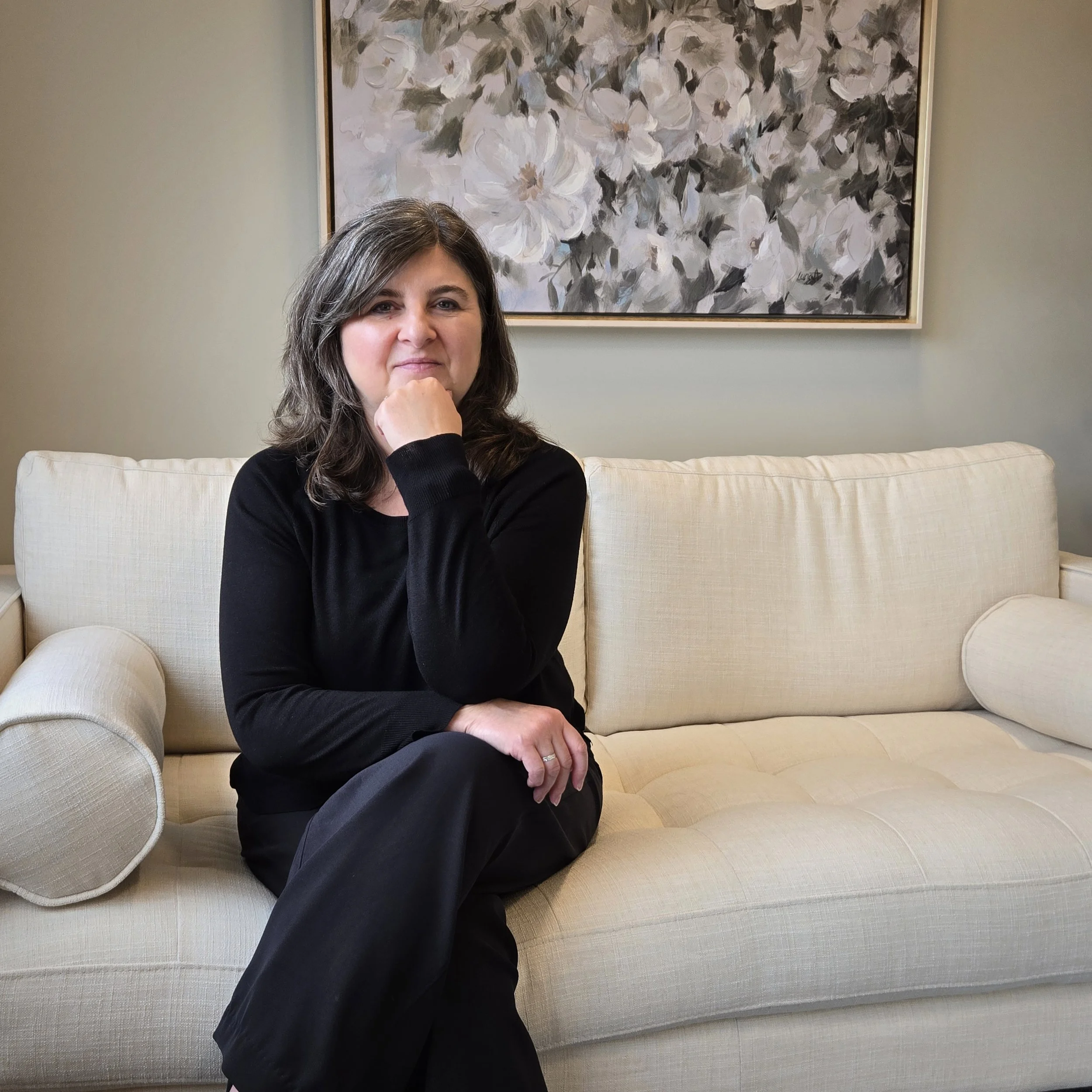
Hi, I’m Lara.
Meet Lara, Experienced OCD Therapist in Calgary
I work with people who are feeling caught in patterns of intrusive thoughts, doubt, checking, reassurance-seeking, avoidance, or mental rituals.
My approach is practical, supportive, and tailored to you. Using Cognitive Behavioural Therapy (CBT) and Exposure and Response Prevention (ERP), we can work together to better understand your OCD patterns and develop new ways of responding to intrusive thoughts, uncertainty, and compulsive urges.
Whether OCD has been part of your life for a long time or you've only recently started questioning the patterns you're experiencing, we can start with what is happening for you now.
I'm glad you're here.
Obsessive-Compulsive Disorder Therapy in Calgary: FAQs
-
This is a very common question that people have. I have a very specifi c approach that helps determine what might be causing the patterns you are experiencing. Once we determine what is occurring in your specifi c situation, a direction for therapy can be established.
-
Yes, medication can be highly eff ective, but it rarely eliminates OCD completely. Medication can help lower the distress you may be experiencing, making it easier to successfully participate in therapy.
-
Yes, therapy is very eff ective regardless of how long you have lived with OCD.
-
You can fill out the contact or Get in Touch form and I will reach out to you with dates and times that I have available. All free consultations are virtual consultations.
-
Most insurance companies will cover psychology services. You may have to reach out to your insurance company to ask about what is covered.
Specifics You Need to Know About Obsessive-Compulsive Disorder Therapy in Calgary
Office location
Suite #214,
30 Springborough Blvd SW
Calgary, AB
Cost per session
Individual (50 min sessions) - $210
Couples/parents (50 min sessions) - $210
Payment options
E-Transfer
Credit Card
Debit Card
In-Person and Virtual Appointments available
In-Person and Virtual Appointments available
Obsessive-Compulsive Disorder Therapy Calgary SW
Start Today with a Free Initial Consultation!
If you're wondering whether therapy could help with OCD, you're welcome to book a free 15-minute consultation.
It's an opportunity to ask questions, share a little about what you've been experiencing, and learn more about how I work with OCD using CBT and ERP.
You don't need to be completely sure where to start or have everything figured out before reaching out. We can begin with a conversation and see whether working together feels like the right fit.
Book your free consultation and take the first step when you're ready.
I look forward to talking to you!
Lara Palset